
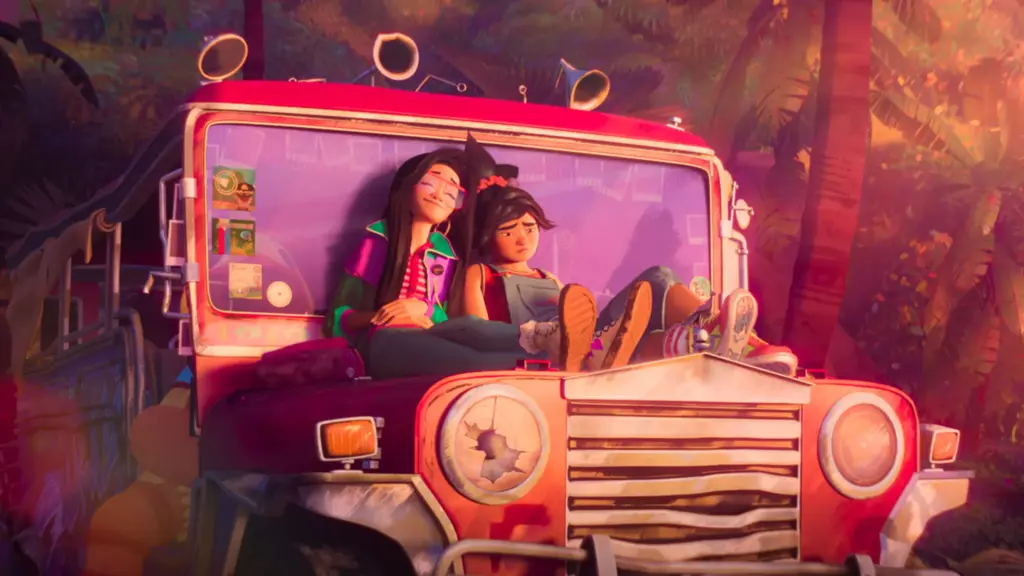
DreamWorks Animation’s Forgotten Island celebrates Filipino culture, mythology, and friendship through an animated adventure featuring H.E.R. and Liza Soberano. The film follows childhood best friends Jo and Raissa as they enter the mysterious island of Nakali, where their memories and friendship face an extraordinary challenge. According to a review published by SINEGANG.ph on October 1, the film highlights Filipino traditions and familiar cultural details while exploring the importance of lasting relationships.
Here are seven ways Forgotten Island showcases Filipino culture and stories to audiences.
1. Filipino Traditions Bring Everyday Life to the Screen
The film incorporates familiar Filipino traditions and gatherings, giving audiences scenes that reflect everyday experiences in the Philippines.
In its review, SINEGANG.ph writer Gab Aniceto points to details such as lechon at a farewell party, relatives singing videoke, and religious imagery commonly found in Filipino homes. These cultural references help establish the film’s Filipino identity beyond its main storyline.
2. Friendship Remains at the Heart of the Story
At its core, Forgotten Island follows the friendship between Jo, voiced by H.E.R., and Raissa, voiced by Liza Soberano.
The two characters first meet as children and develop a close bond that is tested as they grow older and prepare to follow different paths. Their journey explores how friendships change over time and how shared experiences can continue to connect people.
The film uses their relationship to highlight the importance of memories in shaping personal identity and meaningful connections.
3. Filipino Mythological Creatures Take Center Stage
One of the film’s most notable features is its use of creatures inspired by Philippine folklore.
Among the characters introduced in the mystical world of Nakali are Raww, a were-aspin voiced by Dave Franco; Manang, a manananggal voiced by Lea Salonga; and Bungi, a tiyanak voiced by Manny Jacinto.
By bringing these legendary creatures into a mainstream animated adventure, the film introduces audiences to elements of Filipino mythology through fantasy and comedy.
4. The Island of Nakali Creates a World Inspired by Filipino Folklore
The fictional island of Nakali serves as the setting for Jo and Raissa’s adventure after they encounter a mysterious world beyond their everyday lives.
Surrounded by fantastical creatures and unfamiliar dangers, the two friends must navigate their circumstances while confronting the possibility of losing their memories.
The island allows the filmmakers to combine fantasy storytelling with cultural influences drawn from the Philippines.
5. Filipino Talent Contributes to the Film’s Production
The film brings together performers with Filipino connections, including Liza Soberano, Manny Jacinto, Lea Salonga, and Jo Koy, alongside H.E.R. and other members of the cast.
The production also features contributions from Philippine-based Snipple Animation Studios. According to SINEGANG.ph, the studio worked on two-dimensional animated sequences involving Raww and Prince Merman.
Its participation highlights the contribution of Filipino animation professionals to an international production.
6. Animation Helps Tell Stories Through Memories
Beyond its cultural references, Forgotten Island uses different animation styles to support its storytelling.
SINEGANG.ph highlights the film’s two-dimensional sequences, which feature a distinct visual style in scenes involving Raww and Prince Merman. These sequences provide a contrast to the film’s other animated scenes while contributing to its humor and presentation of past events.
The visual changes also complement the film’s broader focus on memories and how people remember important moments in their lives.
7. Filipino Representation Reaches a Wider Audience
The film has drawn attention for bringing Filipino culture and mythology into a major Hollywood animated production.
Its combination of familiar traditions, local folklore, Filipino talent, and an emotionally driven story offers audiences a different perspective on Filipino representation in international entertainment.
Although the film’s cultural portrayal may invite discussion, the SINEGANG.ph review praises its appreciation for Filipino life and its emphasis on friendship. The production also demonstrates how local creative talent can contribute to projects intended for global audiences.
Final Thoughts
Forgotten Island combines friendship, memories, Filipino traditions, and Philippine mythology in an animated adventure designed for a broad audience. Through its characters, folklore-inspired creatures, and contributions from Filipino artists, the film brings elements of Filipino culture into the international spotlight.
As audiences discover the world of Nakali, the film also opens opportunities to appreciate the stories and traditions that make Filipino culture distinctive. Its central message about friendship and memories further emphasizes the importance of the relationships and experiences that shape people’s lives.