
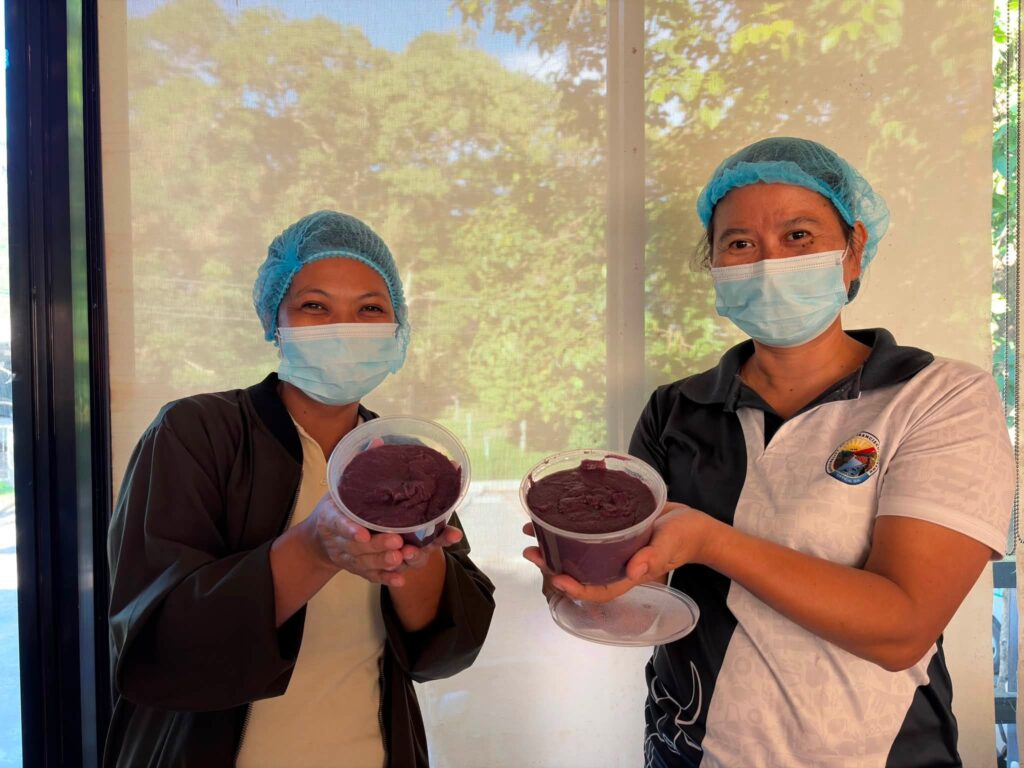
The Filipino purple yam has gone from a familiar dessert staple to a global food trend. Now, the Philippines is restricting fresh exports as producers work to keep up with demand.
For generations, ube has been a familiar part of Filipino food culture.
It has appeared in halaya, ice cream, cakes, breads, pastries, and countless homemade desserts. For many Filipinos, its deep purple color and subtly sweet flavor are closely tied to childhood celebrations and everyday treats.
Today, however, ube is no longer just a Filipino favorite.
The purple yam has become an increasingly recognizable ingredient in cafes, bakeries, restaurants, and dessert menus around the world. Its popularity has grown alongside the global appetite for distinctive flavors and visually striking food.
But that international attention has created an unexpected challenge for the Philippines.
The Department of Agriculture (DA) has indefinitely suspended exports of fresh ube as the country works to protect its limited supply of planting materials and expand domestic production. The Bureau of Plant Industry imposed the suspension in mid-August, covering fresh ube and propagative planting materials intended for consumption, planting, or research.
The move reflects a simple problem: global demand for ube is growing faster than the country’s ability to produce it.
From Filipino Dessert Staple to Global Favorite
Ube’s international popularity has been building for years, helped in part by social media and the growing interest in Filipino cuisine.
Its naturally vibrant color makes it particularly recognizable in photographs and videos, while its mildly sweet, creamy flavor works well in everything from ice cream and pastries to lattes and other drinks.
The trend has reached major international coffee chains and restaurants. Recent coverage has highlighted ube drinks and desserts appearing in the United Kingdom, where the ingredient has been compared with the global rise of matcha.
The appeal also goes beyond its appearance.
As consumers increasingly look for new flavors and culturally distinctive food experiences, ube has become one of the Filipino ingredients gaining recognition outside the country.
For Filipino food culture, that shift is significant.
An ingredient that was once primarily associated with local desserts is now becoming part of the international food conversation.
Why Did the Philippines Halt Fresh Ube Exports?
The export suspension is not a rejection of international demand.
In fact, it is partly a response to it.
The DA said the Philippines currently has a shortage of planting material needed to expand domestic ube production. Agriculture Secretary Francisco Tiu Laurel Jr. said the government wants to keep planting material in the country rather than allow Philippine varieties to be exported and potentially used to establish competing production overseas.
Ube is propagated using portions of the tuber, which means fresh exports can potentially provide material that could be used to grow the crop elsewhere.
The government therefore wants to strengthen the country’s own production base first.
The strategy is essentially to make sure the Philippines has enough ube to grow before trying to sell significantly more of it abroad.
The Ube Industry Is Being Built for a Bigger Market
The export suspension comes as the government works to turn ube into a larger agricultural and export opportunity.
The DA has announced a ₱300-million budget for the ube industry in 2027, while efforts are underway to improve the supply of quality planting materials through tissue culture, community-based nurseries, and other propagation methods.
The government and industry have also formed United Ube PH, a national organization bringing together farmers, processors, traders, exporters, researchers, and other stakeholders.
The goal is to create a more coordinated industry capable of meeting both domestic and international demand.
Researchers at the University of the Philippines Los Baños and the DA are also working on genetically mapping Philippine ube varieties.
The initiative is intended to help protect native varieties, establish the authenticity of Philippine ube in export markets, and support the development of higher-yielding and more resilient varieties.
The Philippines Is Already Exporting Ube Products
The current suspension applies specifically to fresh ube and propagative planting materials.
It does not mean that every ube product is banned from international markets.
Value-added products such as ube powder, halaya, jam, and paste remain eligible for export. Philippine ube products are already reaching markets in Canada, the Middle East, and parts of Asia, with growing opportunities in the United States, South Korea, and Europe.
That distinction could become increasingly important as international demand grows.
Instead of simply exporting the raw crop, the Philippines has an opportunity to develop more products around ube — from ingredients for international food manufacturers to finished Filipino desserts and packaged food products.
A Global Trend With a Filipino Identity
The rise of ube also says something about how Filipino food is being experienced internationally.
Filipino ingredients are increasingly appearing outside traditional Filipino restaurants and communities. They are being incorporated into contemporary desserts, drinks, pastries, and other food concepts.
Ube’s rise is particularly interesting because it carries a strong Filipino identity.
It is not simply a generic purple-flavored ingredient. Its history, cultivation, and role in Filipino cuisine give it a cultural story that travels with it.
That creates an opportunity for Filipino farmers, food producers, chefs, and entrepreneurs to benefit from the ingredient’s growing popularity.
But it also raises a question about how that growth should be managed.
Can the Ube Boom Last?
International demand is strong, but supply remains the industry’s biggest challenge.
BMI, the research arm of Fitch Solutions, has warned that sluggish cultivation growth and persistent supply bottlenecks could limit ube’s ability to move from a viral food trend into a lasting global category. The research firm said the current supply constraints make expanding cultivation capacity and improving access to planting materials critical.
For the Philippines, that makes the current moment bigger than a passing food trend.
The country has an ingredient the world increasingly wants. What happens next will depend on whether producers can expand supply while protecting Philippine varieties and ensuring farmers benefit from the growing market.
For now, ube’s journey from Filipino dessert tables to international cafe menus is a reminder that some of the country’s most familiar flavors can have a much bigger story to tell.
The world may have just discovered ube. The Philippines now has the opportunity to decide how that story grows.